
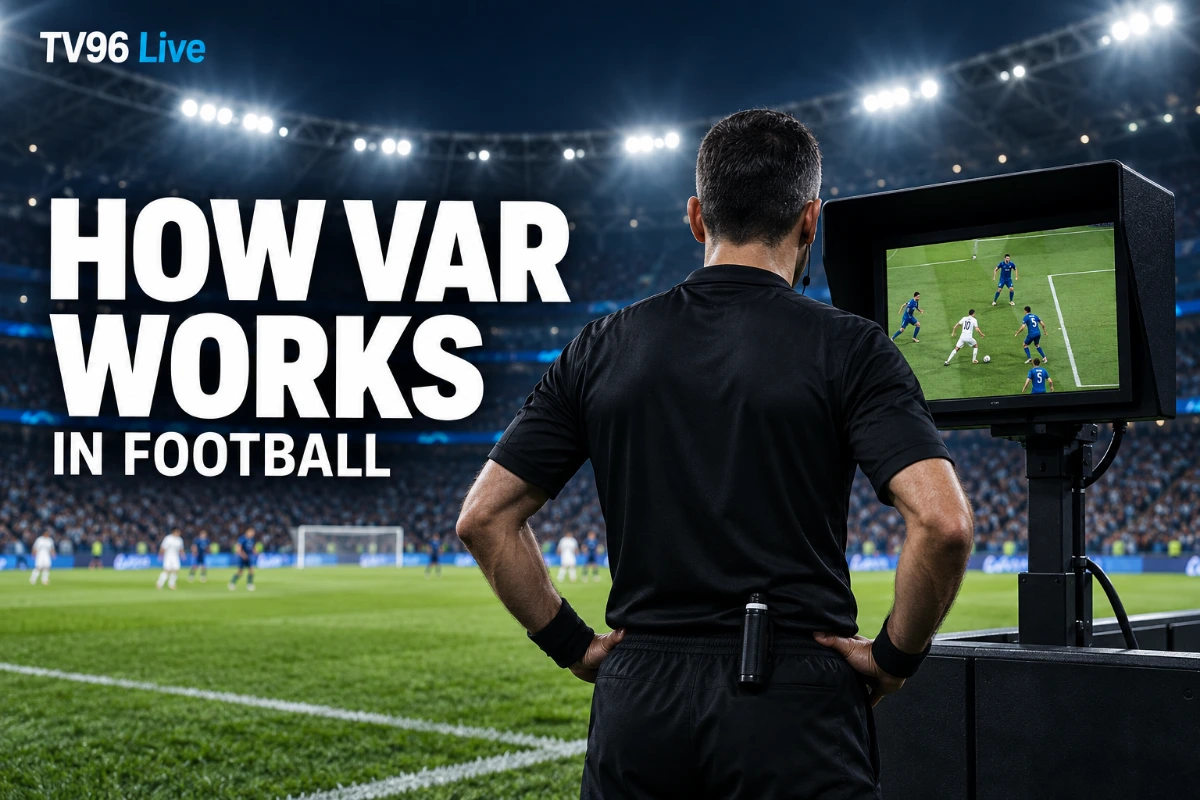
VAR stands for video assistant referee. It allows designated video officials to help the on-field referee with specified important decisions using replay footage. It does not turn every disputed contact, throw-in or yellow card into a full video appeal.
The scope of VAR has changed over time. This guide reflects the 2026/27 Laws of the Game, including the new provision for clearly incorrect second-yellow dismissals. When reading an older match report, check which edition of the laws and which competition arrangements applied.
The core reviewable situations
Goals and possible goals can involve checks for offences such as offside, a foul or handball in the relevant attacking sequence, or whether the ball had gone out. Penalty incidents concern whether a penalty should be awarded or cancelled, including the location of an offence.
Direct red-card situations can be reviewed. Mistaken identity can also be corrected when the wrong player is cautioned or dismissed. In 2026/27, a red card resulting from a clearly incorrect second caution is within scope too. That does not create a general review of every first yellow card or every unpunished challenge.
Competitions may additionally opt into immediate correction of clearly wrongly awarded corner kicks under the new provision. It is an optional arrangement with an immediacy condition, not a promise that all corners in all leagues will receive a lengthy review.
A check is different from a review
A check is the video officials' examination of an eligible incident. Many checks happen without the referee walking to a monitor. If the footage does not justify intervention, the original decision stands and spectators may hear little about the process.
A review is the process used when the referee needs to reconsider a decision with video assistance. The referee can examine footage at the pitchside monitor for a subjective judgment. Factual information can sometimes be communicated without an on-field monitor visit. The referee retains the final decision.
For a viewer, this means a television message saying a goal is being checked does not establish that an offence occurred. It establishes that the officials are examining the relevant sequence. Reporting a cancellation before the decision is confirmed can spread an error.
Why the original decision matters
VAR intervention is generally concerned with a clear and obvious error or a serious missed incident within its scope. It is not simply a second referee choosing the decision they personally prefer whenever two reasonable interpretations exist.
Imagine a defender making contact with an attacker in the penalty area. A useful analysis must ask whether the contact was an offence under the laws and whether the footage meets the intervention standard. Showing any contact in slow motion does not by itself answer either question.
Now imagine the referee penalising a foul just outside the area while the footage establishes that the contact occurred inside. The location can be a factual part of the decision, even though judging the underlying challenge involves interpretation. Separating those questions helps explain why different incidents use different review procedures.
Following a goal check
When a goal is checked, identify the issue being examined. Is the question offside, a possible attacking foul, handball, or the ball leaving play? Those are different legal questions, and a replay which settles one may say little about another.
An offside line, for example, does not decide whether a separate challenge was a foul. Equally, a still image of contact may fail to show its force, direction or sequence. Watch the full movement where available rather than treating one selected frame as the entire event.
If the referee delays a restart, wait for the confirmed outcome. The delay itself is not evidence that the goal will be disallowed. Some checks take longer because the officials need the right angle or must establish the sequence accurately.
What video cannot eliminate
Camera angles can be incomplete or obstructed. A slow replay can clarify the point of contact while giving a poor impression of normal-speed intensity. Decisions involving judgment can remain controversial even after the relevant footage has been seen.
Technology also does not remove the need for clear communication. Supporters can see a long pause without hearing the discussion that explains it. A responsible match report separates the observed sequence, the announced decision and any interpretation of why the officials reached it.
VAR availability itself depends on the competition and match arrangements. Do not assume that a lower-division fixture, cup round or international friendly uses the same equipment and procedures as a major league match.
Reporting a decision accurately
A useful account states the original decision, the review topic and the final outcome. If the competition releases an official explanation, link it. Avoid inventing a conversation between the referee and the video room or attributing a motive that cannot be established.
For results affected by late checks, allow the available match information to update before treating a score as final. More explanations of football terminology are available in Football Guides. The aim is to understand the decision process precisely, even when disagreement about a judgment remains.